
Performance Enhancing
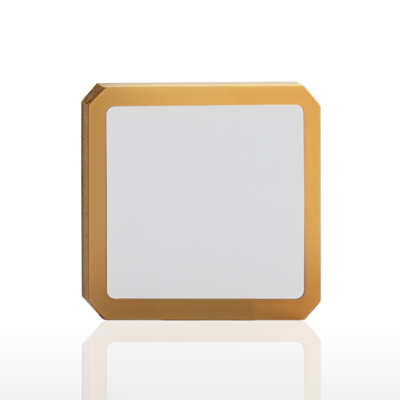 Reynard produces a wide variety of metallic mirror edge to surface coatings capabilities including aluminum, gold and silver providing a moderate level of reflection over an extremely broad spectral range. Most metals can be evaporated including gold, aluminum, silver, copper, nickel and many more, tend to be soft and need a dielectric coating for protection. Metallic mirror coatings have a broader reflection bandwidth compared to dielectric mirrors.
We can supply a variety of custom metallic mirror coatings for your specific application!
Custom prototypes to volume production are available.
Reynard is ISO 9001:2015 certified, ITAR registered, and Cybersecurity (CMMC) compliant, providing the quality standards and compliance many industries require.
Contact us with your custom optical coating requirements!
SPECIFICATIONS:
| Metallic Coating Types: | Aluminum: Bare, Protected, Enhanced, UV Protected, UV Enhanced Black: Opaque Gold: Bare Gold & Protected Gold Silver: Protected First Surface Silver & Protected Second Surface Silver |
| Sizes: | 25mm to 200mm |
| Coating Materials: | Alloys, Aluminum, Chrome, Gold, Inconel, Nickel, Platinum, Silver, Titanium |
| Substrate Materials: | Ceramic, Glass, Infrared Materials, Metal, and Plastic |
| Durability: | PASS: 30 min. in boiling water PASS: slow/fast Scotch Tape (adhesion) test Tensile Pull Strength: ≥10,000psi (typical) |
APPLICATIONS
- Lighting Systems
- Laser Systems
- Illumination Systems
- Digital Imaging
- Bus Bars
- Soldering & Sealing
- Hermetic Seals
- Telescope Mirrors
- Heater Elements
- Bar Scanners
- IR Imaging Systems
- Surveillance
- Metal Grids
- EMI Shielding
- Optical Sensors
- Solder Pads
- Mirrors
- Laser Scanners
Bare Aluminum Coating

Bare aluminum is very soft and scratches easily; therefore, it must be handled with great care. The reflectivity is approximately 88% in the visible wavelengths.
The graph above shows Percent Reflection vs. Wavelength – microns, ranging from 0.3 to 1.0 µm with reflection near 88–90% across the visible spectrum.
Protected Aluminum Coating

Protected aluminum mirrors are first coated with aluminum, then protected with silicon monoxide. The mirrors are usable from 400 nm to the far infrared. The reflectance is typically above 88% in the visible and above 96% in the far infrared. These mirrors are hard and durable. They meet all requirements of MIL-M-13508.
The graph above shows Percent Reflection vs. Wavelength – microns, ranging from 0.3 to 1.0 µm, with reflectance around 88–90% in the visible region.